Photo courtesy of National Library of Scotland from Unsplash
My last blog post, More than Ashes,considered the way rationing affected life for everyone in Britain throughout the war years. Anyone caught looting was threatened with a life sentence, or worse still, for the worst offenders, hanging. However, perhaps with a view to the importance of morale, no-one was actually executed for looting and most were given heavy fines or shorter sentences.
But, like so much in life there were both upsides and downsides to those war years, something clearly exemplified with the process of mass evacuation of children that took place at the very start of the war, in 1939.
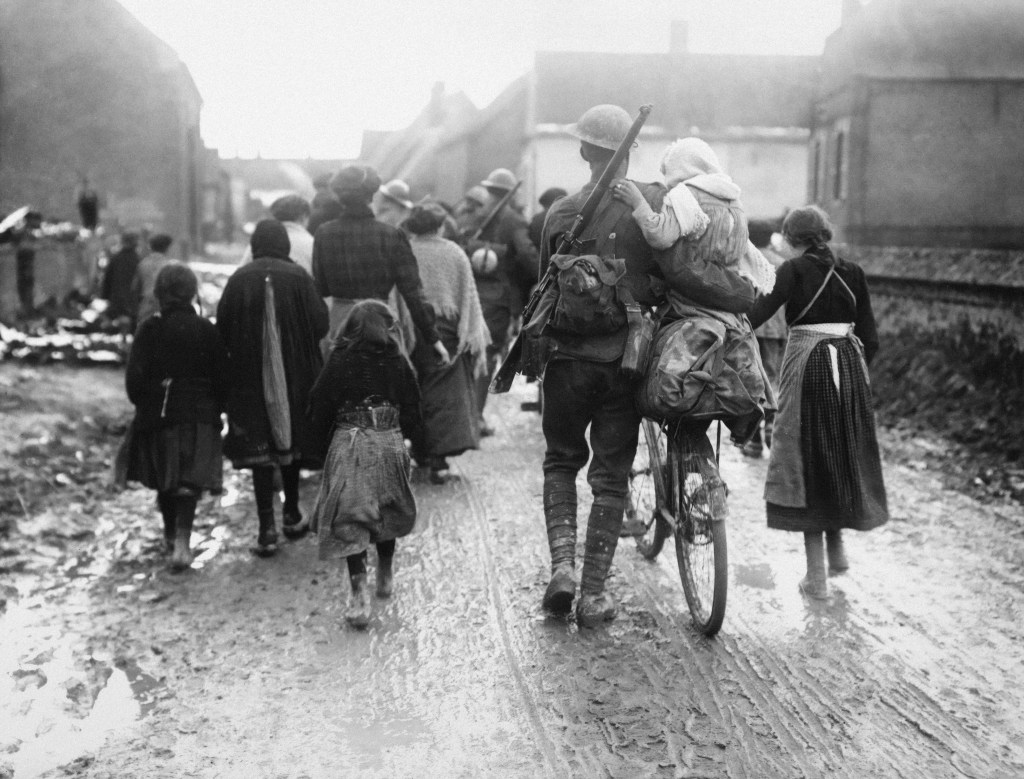
At the end of August 1939, when it was clear that war was inevitable, plans were put in place for the biggest and most concentrated mass movement of people in Britain’s history – Operation Pied Piper. In the first four days of September 1939, nearly 3,000,000 people were transported from towns and cities in danger from enemy bombers, to places of safety in the countryside. Most were schoolchildren, who had been labelled like pieces of luggage, separated from their parents, accompanied instead by a small army of guardians – 100,000 teachers. By any measure it was an astonishing event, a logistical nightmare of co-ordination and control beginning with the terse order to ‘Evacuate forthwith,’ issued at 11.07am on Thursday, 31 August 1939. Few realised that within a week, a quarter of the population of Britain would have a new address.
Many children found themselves in happy, loving homes and stayed in touch with their ‘new’ families long after the war ended. Sadly, there were unhappy placements too.
Although the south coast of England was considered a safe haven at the start of the war, it soon became clear that it was to be the target for much of the enemy bombing. As a result, it changed from a Reception area to an Evacuation area, with 200,000 children re-evacuated to safer locations.
Evacuation reshaped an entire generation of youth, yet without Operation Pied Piper, and the biggest movement of people in Britain’s history, the death toll in the Second World War would undoubtedly have been much higher.
Never Enoughexplores the effects on one young family who take in an evacuee, a act of kindness that brings with it challenges, not just for the young lad who has been uprooted from all he knows, but also for the Chandler family, who need to adjust to a world that has been upended. In this extract we hear the reflections of Mrs Chandler as she prepares for the inevitable changes to come…
It has been a summer of closing down and closing in. Both the play parks near to us in Tamarisk Bay now remind me more of the trenches of my nightmares than a place for my children to enjoy. Soil has been dug, shelters created, surrounded by sandbags, just waiting for terrified families to hide there when the air-raid sirens sound for real. The gas masks sit on our kitchen counter like some kind of strange animal invasion. I wish for nothing more than to put them into the dustbin, along with all the other unwelcome additions to our home. Taped windows and blackout curtains, the flask of water, tinned food and blankets kept in the understairs cupboard; our own attempt at a safe haven should the worst happen. All I can do is pack away memories of those carefree weekend afternoons and store them like tinned food, keeping them fresh until we can enjoy them again.
Many people’s lives were changed by Operation Pied Piper and the subsequent waves of evacuation, with some children remaining with their ‘adopted’ families for the duration of the war, and remaining in touch with them for years afterwards. Here is an excerpt from Mrs Dorothy Ackford’s story, provided to the BBC archive – WW2 People’s War’.
In April 1941 I was evacuated to Cornwall with my school, travelling by train and singing patriotic songs. I don’t remember any of us being worried at the time but we were very curious as to where we were going and to whom.
My friend Barbara and I were lucky to be billeted with a Cornish family in the village of Mitchell. We were there for about 8 months, after which we returned home. It changed our lives to some extent. The family we were with consisted of Father (farming), Mother (at home), 2 adult daughters (one a land girl and one at home) and 4 adult sons. One was in the Grenadier Guards, one in the Coldstream Guards and the two younger ones at home working on the land and being members of the local Home Guard.
The house was a large, detached ‘farmhouse’ with a lot of land around it. The only loo was at the top of the garden. Luckily the weather was good during our stay! We were able to pick flowers, vegetables, and we loved looking at the hens and their young chickens to whom we gave names. There were occasional air raid warnings but nothing much happened. We were called out of our beds and we slept on blankets on the living room floor, underneath an enormous heavy wood dining table.
As a family we kept in touch with our hosts in Mitchell over many years, exchanging Christmas cards, etc. and occasional visits. I think only one is left now (as at last Christmas).
I feel sorry for evacuees who were unhappy away from home. Barbara and I were very lucky; our family were great. An additional bonus, of course, was that we came to love Cornwall. We go back each year.
My next post goes behind the scenes of another of my World War Two novellas, Choices…where we meet ten-year-old Vera Stubbs, as she discovers that living through a world war, is not just frightening, but confusing too.
Just click on ‘subscribe’ on the home page to follow my website, to ensure you don’t miss out on forthcoming articles.
We never know which is the best decision. Whether the children were away from their families, with all the trauma that could come, whether the children would stay with their families and could have died… No good ever comes from wars…
That is so very true and it is so sad that a handful of people in power can create such devastation for the millions who would be more than happy to live side by side in peace.


Leave a Reply