Why study the past when it is just that – past, gone, over and done with – or is it?
There are numerous reasons that historians cite for their interest in the past, probably as many reasons as there are historians!
Here’s a few suggestions that various historians have cited, to start us off:
- historical research provides an explanation of the facts
- history offers us a chance to look for themes across time
- it is possible to use selective historical facts as persuasion for an argument (ie, she did that because… or that happened because…)
- history is about embracing the messiness and complexities and paradoxes of the past.
Let’s take each of these and explore them a little further.
Historical research provides an explanation of the facts.
The trouble is, how certain can we be that we are really considering ‘facts’. In a previous blog post, What is real? I raised the challenges posed in the present day by ‘fake news’. But knowing how to establish ‘fact’ is not just a present day dilemma.
Historians are human and all humans are biased in one way or another, affected by each person’s own experience and interests. What’s more, there is often an element of bias in the sources that we historians use to establish our theories. Even primary sources, such as letters, diaries, journals, will contain the bias of the writer.
Newspaper and journal articles are all subject to the scrutiny of an editor, who might deem that one or another thing is more likely to be of interest to their readers. What has been edited out can often be even more illuminating than what has been left in!
History offers us a chance to look for themes across time.
In John Arnold’s book: History – a very short introduction, we are treated to some fascinating reflections:
‘Nothing ever ends, really; stories lead to other stories, journeys across a thousand miles of ocean lead to journeys across a continent, and the meanings and interpretations of these stories are legion. ‘Origins’ are simply where we choose to pick up the story, dictating (and dictated by) what kind of story it is we wish to tell. ‘Outcomes’ are where we wearily draw to a close’.
Studying history gives us the chance to use selective historical facts as persuasion for an argument (ie, she did that because… or that happened because…).
Of course, like most things, opinions about how or why to study history has changed across the ages. Arnold explains that:
‘historians, particularly from the late stages of the German Enlightenment, were increasingly convinced that to understand history properly, one needed to do two interlinked things: first, to study the archival sources in great detail; and secondly, to develop theories of causation’.
In other words, to look at what happened and work out why. However, even if we can establish a ‘cause’ or a ‘plurality of causes’ for a particular event or social change, those causes become, in turn, the cause of something further still.
This circularity makes the whole exercise endlessly fascinating and as difficult to pinpoint as trying to identify exactly where the droplets came from to create the cloud formations that sit above us.
History is about embracing the messiness and complexities and paradoxes of the past.
Over the past few weeks I have been considering a range of different historical approaches, that is, ways of looking at history. I’ve mentioned a few below, but bear in mind that none of these stand alone, they are all interlinked, working in synergy with each other.
Historians can look at the past through a series of lenses:
- social, eg, race, ethnicity, gender
- political
- economic
- religious.
It’s not just history that gives a chance to look at the world through different eyes. Music, poetry, art and, of course, fiction, can lead us to new thoughts and new experiences. In The Harvest, the young protagonist, Zara Carpenter, reflects on events in her life, triggered in part by Vincent Van Gogh’s painting, The Harvest.
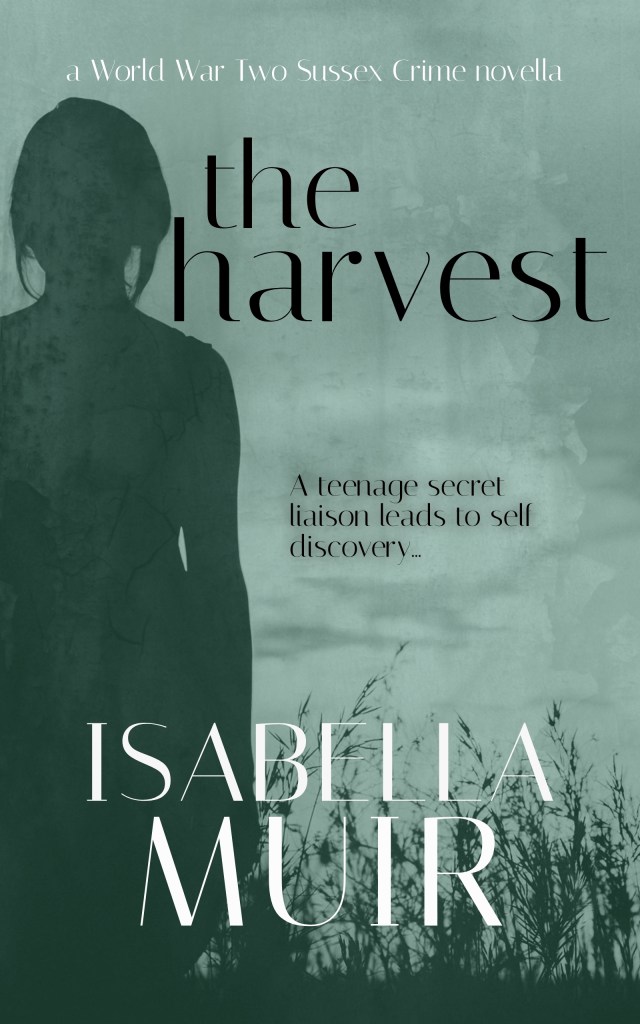
‘I’ve heard it said that a painting offers a window into another world. When we look at an image we can cross a divide, from the known into the unknown, to gaze at a scene that could barely be imagined before the artist chose to create it.
FROM ‘THE HARVEST’ A story of self discovery by isabella muir
It was a painting that set me off on a journey that summer when I’d just turned sixteen. A time in my life that represents the divide between one Zara and another. All the events that summer led to a division of sorts, while at the same time resulting in a coming together I could never have expected.’
Each of these approaches to history offer a way of connecting with the past and will ultimately provide different ‘answers’ to any question a historian might like to pose. And perhaps that’s one of the best things about history – there are no concrete answers; theories will emerge and be overtaken by new theories and viewpoints.
I like to think that the value of historical investigation is also that it brings the past into the present, and provides future generations with opportunities to compare and contrast perspectives – from the moment the historical event or fact occurred, through later viewpoints of that event or fact, and on to the moment a future generation picks up a text and reads it.
Arnold puts it succinctly: ‘writing history is a natural and necessary activity: history is to society what memory is to the individual’.
What do you think?
Just click on ‘subscribe’ on the home page to follow my website, to ensure you don’t miss out on forthcoming articles.
My next post, More than Ashes, explores the facts behind my fiction!
To continuing exploring the topic, take a look at:
- John H. Arnold, History: a very short introduction. Oxford University Press, 2000.
- Richard J. Evans. In Defence of History, Granta Books, 2018. ProQuest Ebook Central.
 Isabella Muir
Leave a Reply