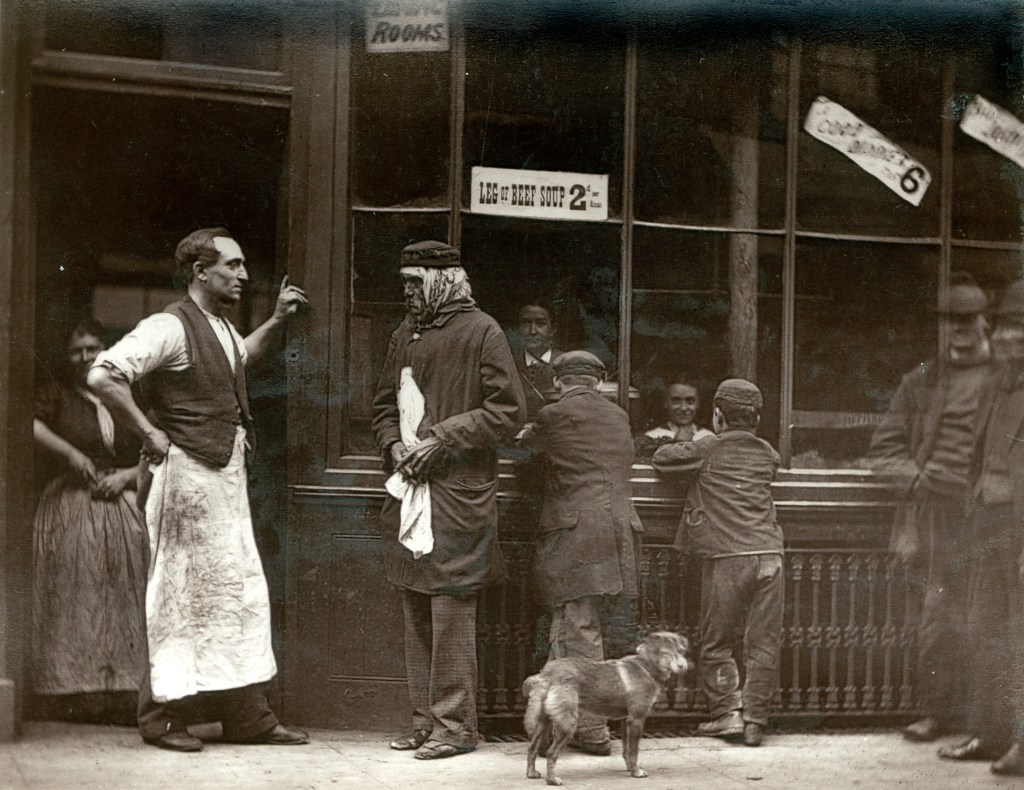
In every society in the world there is division between those who have and those who have not. Even in the most equitable society, where resources and labour are shared, there will be some who have greater ability in one sphere or another, for example, they may be better organisers, or more successful farmers. But sadly, for the majority of the world, there is little equality, with individuals and groups penalised because they lack wealth or status or land or rights.
Inequality in one form or another has existed for as long as mankind has walked the earth. Countries remain unequal as a result of their access – or lack of it – to vital land and sea routes for trade. Still today news reports tell of conflicts over natural resources, whether that be precious minerals in Greenland and Ukraine, or scarce resources, such as water and land.
Power in the hands of empires, rulers, and dictators has determined how their subjects should live, often resulting in such tragedies as enslavement and poverty for many. Today, one percent of the world’s population has more wealth than the remaining 99 percent combined.
In a recent blog post (What if new isn’t always better?) I reflected on the inequalities imposed on peoples after the First World War when the League of Nations mandate system was put in place. A system that, on the face of it, was designed to prevent future wars resulted in greater division and discontent. Between the two world wars nations began to strive for independence from their colonial ‘masters’ but then came the Second World War, which once again divided the world vertically along racial lines, creating divisions between powers with significant territory and those without – the haves and have- nots.
While acknowledging the widespread inequality that exists across the world, it cheers me a little to reflect on bright spots – events, or people, who have confronted discrimination, using the resources they had – whether that be brains or brawn – and who have gone on to achieve an element of recognition.
Four examples come to mind:
- The excellent film, ‘Hidden Figures’ – that depicts the true story of three of women, known as “human computers”, who were taken on by NASA, tasked with calculating the momentous launch of astronaut John Glenn into orbit in 1962, and guaranteeing his safe return. They experience dreadful racism, but eventually their intellectual ability was recognised by NASA, and their skills acknowledged.
- ‘Salt of the Earth’ is a 1954 American film drama that advanced the feminist social and political point of view. Its plot centres on a long and difficult strike, based on the 195s strike against the Empire Zinc Company in Grant County, New Mexico. The company is identified as “Delaware Zinc”, and the setting is “Zinc Town, New Mexico”. The film shows how the miners, the company, and the police react during the strike. Salt of the Earth employed mostly local miners and their families as actors and was initially mired in controversy and was suppressed. Eventually though, it was seen by more and more people until it came to be recognized as an important cultural, political and aesthetic work. In 1992, it was selected to the Library of Congress’s National Film Registry of significant U.S. films.
- The hop pickers of the 1930s and 1940s – families, usually women and children from London, who arrived in Kent for three weeks in September to pick hops. This was certainly an example of capitalism making use of labour, but also labour finding a way to survive. People used their annual holiday to take on this extra work, to supplement otherwise pitiful wages from their usual employment. They experienced extremely basic living conditions while doing the hop picking, but valued the sense of community and friendships made and chose to return year after year.
- The herring girls – during the 19th century and early 20th century. Young women travelled on foot, by train, or by boat, moving from town to town as the herring season progressed, from Scotland’s Orkney Islands and Shetland to the Yorkshire coast, and as far south as Great Yarmouth in Norfolk. Away from home and the restrictions of rural life, the herring girls developed strong bonds with their fellow workers, creating a sisterhood that transcended their individual backgrounds. Many were in their early teens or early twenties. Despite the harsh conditions, the job offered freedom and independence that was rare for women at the time.
These examples point to the idea that although the ‘have-nots’ face difficulties, they do have power – albeit that power, once expressed, comes at a cost. Workers have the power to withhold their labour, although this may leave them at risk of starvation or punishment. Marginalised communities have the power to gather together to protest, often at great sacrifice until their voices are heard. The suffragettes are a case in point.
In a recent blog post – Finding a voice – I reflected on some of the ways people sought freedom after the political constraints imposed on them after the First World War, using their voice to combat inequalities. During the Second World War some men, held in British prisons for crimes committed before the war began, were freed in order to serve as soldiers. I wonder how ‘free’ those prisoners considered themselves, as they went to join the front line.
More than Ashes, one of my Second World War novellas, gives us a glimpse as to some of the thinking back then…
When the news was first announced there had been plenty of arguments. Opinion on the Government’s decision to release prisoners was divided. Some complained that criminals should stay locked up until they had served their full sentence. Others disagreed, saying the men were more useful as soldiers, and anyway it was only the criminals whose misdemeanours were relatively minor who had been let out early. Murderers stayed locked up, that’s if they hadn’t already been hanged for their crime.
The two opposing sides would never reach a consensus and it remained the topic of conversation in pubs, on street corners and outside church after Mass on Sunday mornings. Families who were able to welcome home a loved one some weeks or months before their sentence was up made a show of celebrating. Others kept quiet, hoping the ex-con could slip back into the community unnoticed. Then there were the wives and children who would have preferred the man of the house to remain behind bars. Seemed that the police were more keen to punish burglars than wife beaters.
Sergeant Snow had his own opinion about it all. The prisons needed emptying to make space. There was talk of bringing in the death penalty for looters. Maybe that was harsh, but something had to be done. Until now he’d been lucky, folk in Tamarisk Bay hadn’t committed the kind of crimes he’d heard about from fellow police officers in some of the larger towns and cities, like Brighton and London. One report he’d read described how looters raided a well-to-do café after it was bombed, ferreting around among the dead, looking for expensive jewellery. Seems they even cut people’s fingers off to get the rings. If that was the way crime was going maybe they should be threatened with hanging, or life in prison at least.
As well as divisions between rich or poor, inequality appears in many guises: gender, sexuality, race, national origin, ability, character, and intelligence. Certainly, race continues to be a significant factor.
W.E.B. Du Bois, an American sociologist, historian, author, editor, and activist, has been hailed as one of the most important Black protest leaders in the United States during the first half of the 20th century. Du Bois argued that a whole array of colonial practices were instigated in the name of world peace during the inter and postwar years.
In 1948 he suggested that both world wars were:
‘wars primarily of jealousy between imperial nations [in an effort] to reallocate the mastership of the world’.
Arguing that colonialism was just another form of warfare, in 1950 Du Bois said:
‘We were at war yesterday; we are at war today; we will be at war tomorrow because big business wants war and builds its profits, direct and indirect on war, on the attempt to murder all who want peace and abundance.’
Today, as we see conflicts continuing around the world in name of power and ownership – of land, of peoples, of resources – we might feel that the words of Du Bois still ring true.
Throughout his life, Du Bois continued to believe that capitalism was the primary culprit responsible for the subjugation of people of colour around the world and, it could be argued, that a capitalist society depends on the ‘have-nots’ for the system to work. My next post – The bottom billion – will be considering capitalism in all its guises!
Just click on ‘subscribe’ on the home page to follow my website, to ensure you don’t miss out on forthcoming articles.
To continuing exploring the topic, take a look at:
- Adom Getachew, Worldmaking after Empire: the Rise and Fall of Self-Determination.
- W.E.B. Du Bois, Black Reconstruction.
- Salt of the Earth: https://www.youtube.com/watch?v=W9iY4s15Il0
1960s Agatha Christie apartheid birdwatching books child migrants Christmas community Contemporary history cosy mysteries cozy mysteries crime fiction cultural history evacuation family life fiction globalisaation historical fiction history indigenous peoples inequality inspiration Italy League of Nations mysteries nature racial segregation RAF reading research Second World War short stories sixties social history social protests suspense Sussex swinging sixties translation Vietnam War wildlife women sleuths works in progress WW2 wwii


 Isabella Muir
Leave a Reply